



Streamline your oncology study workflow, board examination preparation, and clinical evidence synthesis with this comprehensive Academic Study & Clinical Reference Notebook.
Designed for oncology fellows, hematology/oncology residents, advanced practice providers, medical students, clinical researchers, and academic clinicians, this structured notebook provides dedicated frameworks for organizing evidence, reviewing clinical concepts, documenting research findings, and translating oncology literature into practical clinical insights.
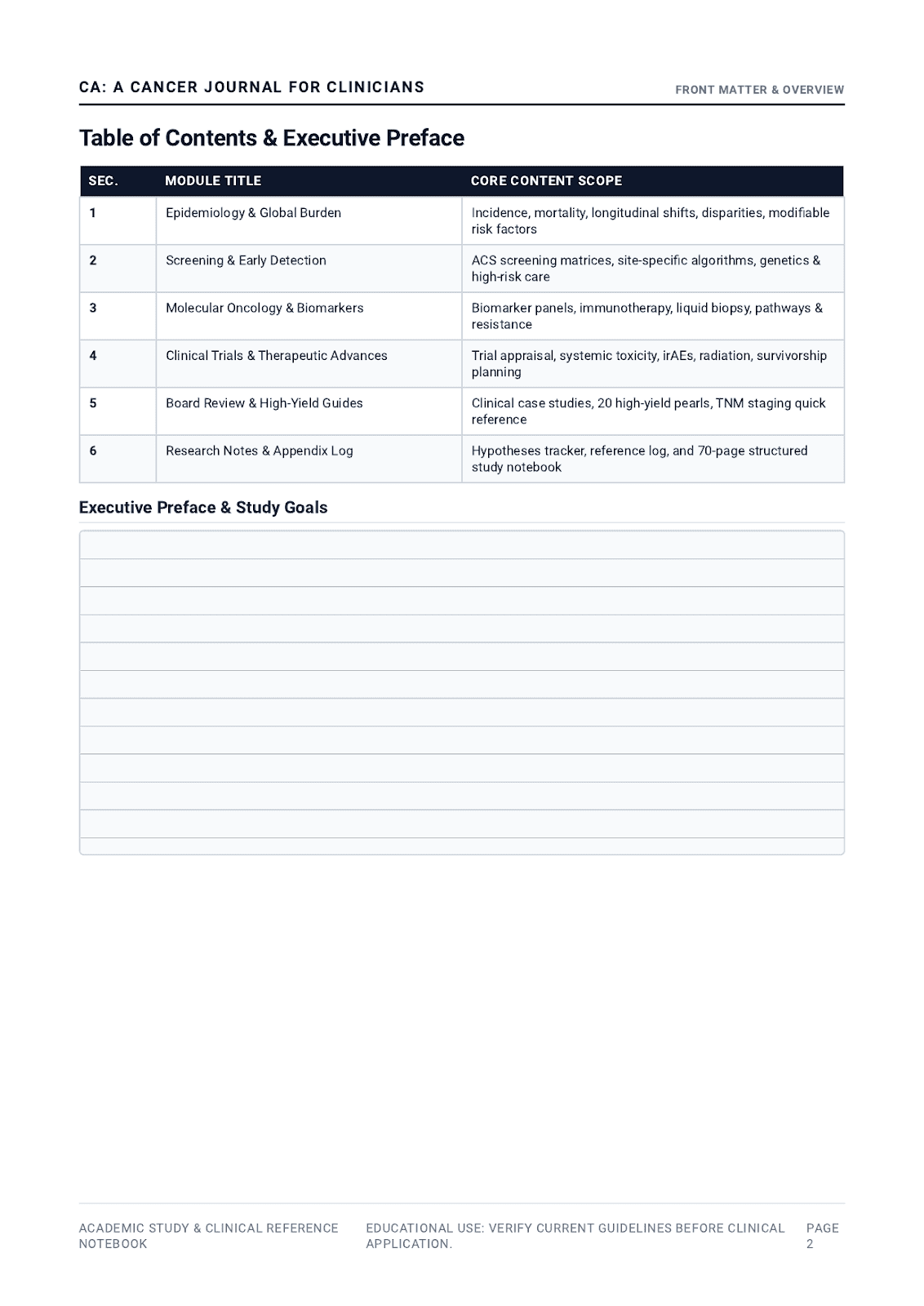
Core Sections & Learning Modules
Module 1 — Epidemiology & Global Cancer Burden
Structured tracking pages for:
-
Cancer incidence and mortality trends
-
Geographic variations and emerging patterns
-
Leading cancers in men and women
-
Key epidemiologic observations and research notes
Module 2 — Screening & Early Detection
A structured screening reference designed to help organize current recommendations across major cancer types, including:
-
Breast cancer
-
Cervical cancer
-
Colorectal cancer
-
Lung cancer
-
Prostate cancer
Includes an ACS screening schedule matrix for streamlined review and comparison.
Module 3 — Molecular Oncology & Biomarkers
Dedicated layouts for organizing and reviewing:
-
Molecular and biomarker panels
-
Immunotherapy targets
-
Liquid biopsy and circulating tumor DNA (ctDNA)
-
Predictive and prognostic biomarkers
-
Mechanisms of treatment resistance
Module 4 — Clinical Trials & Therapeutic Advances
Structured templates for reviewing and synthesizing therapeutic evidence, including:
-
Clinical trial appraisal
-
Systemic therapy and toxicity tracking
-
Immune-related adverse events (irAEs)
-
Radiation oncology modalities
-
Treatment advances
-
Survivorship and follow-up planning
Module 5 — Board Review & High-Yield Clinical Guides
Focused study resources to support oncology board preparation, including:
-
Clinical case-study workups
-
20 high-yield clinical pearls
-
TNM staging quick-reference frameworks
-
Structured case presentation templates
-
Treatment and surveillance planning notes
Module 6 — Research Notes & Appendix
A dedicated research and study workspace featuring:
-
Hypothesis tracker
-
Reference and citation log
-
Evidence synthesis notes
-
Research observations
-
70 pages of structured study and note-taking layouts
High-Yield Tools & Reference Features
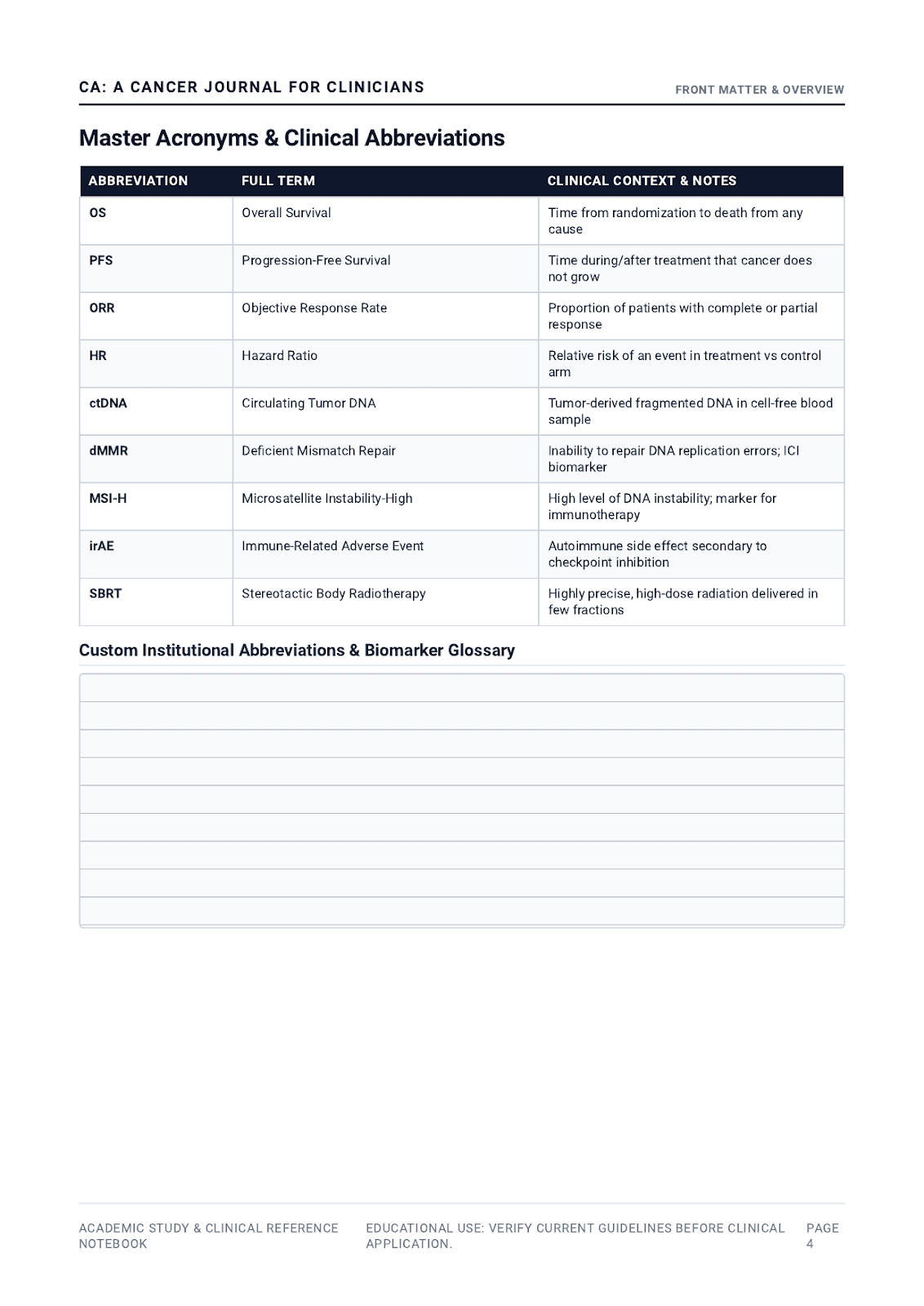
Oncology Acronym & Glossary Reference
A convenient quick-reference guide covering commonly used oncology terminology and abbreviations, including:
OS, PFS, ORR, HR, ctDNA, dMMR, MSI-H, irAE, SBRT, and more.
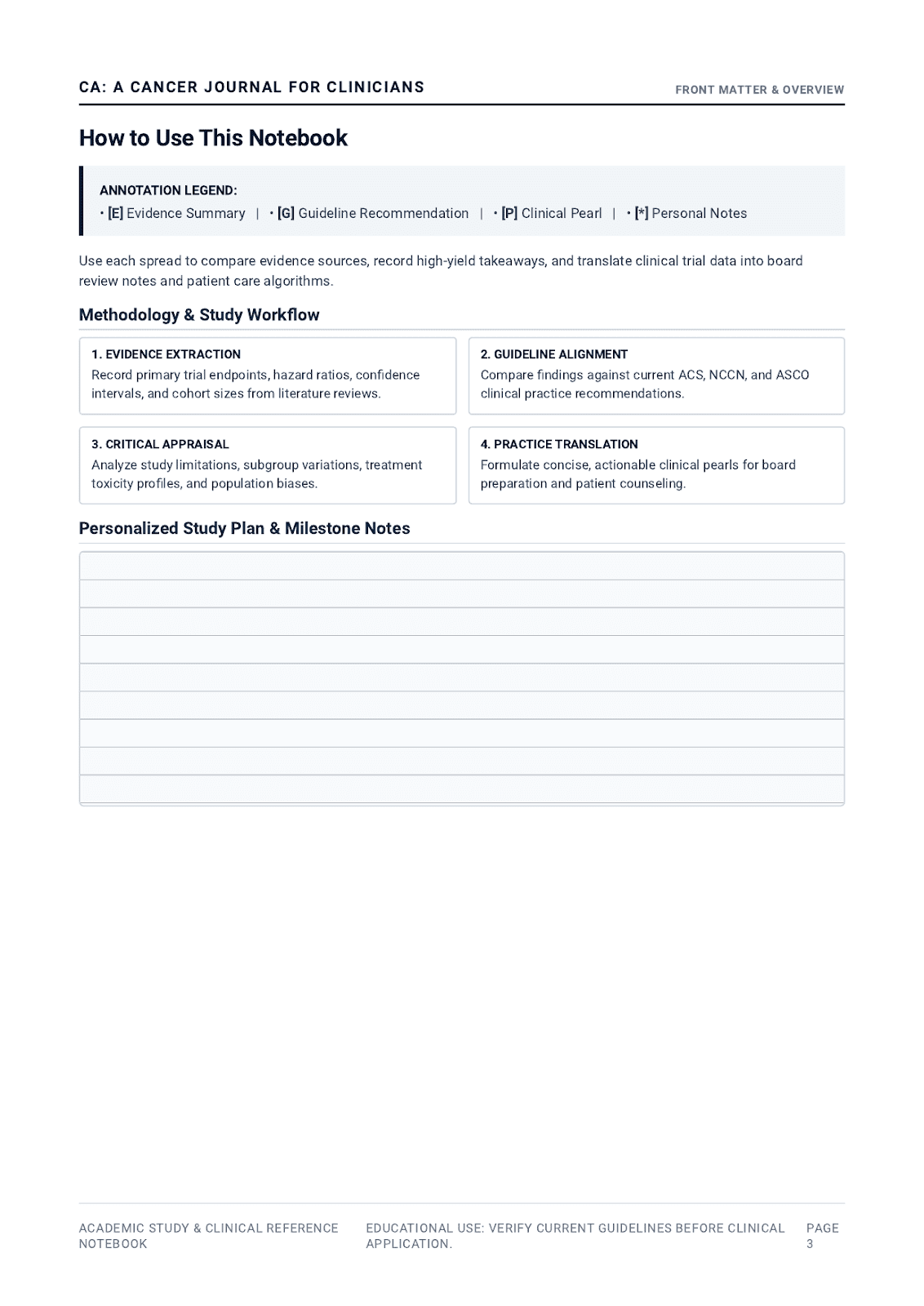
4-Step Evidence Workflow
A guided framework for moving from published evidence to clinical understanding:
1. Evidence Extraction → 2. Guideline Alignment → 3. Critical Appraisal → 4. Practice Translation
Guideline Update Tracker
Organize publication dates, recommendation changes, and key updates from major oncology organizations, including:
-
American Cancer Society (ACS)
-
National Comprehensive Cancer Network (NCCN)
-
American Society of Clinical Oncology (ASCO)
Board Review Case Workups
Structured templates for documenting:
-
Clinical presentation
-
Disease staging
-
Biomarker profiles
-
First-line systemic treatment strategies
-
Treatment considerations
-
Surveillance planning
12 Printable & Digital Study Pages
Standardized pages designed for organized note-taking, evidence synthesis, clinical trial review, board preparation, and research documentation.
Designed For
-
Oncology Fellows & Hematology/Oncology Residents
-
Medical Students preparing for oncology rotations, USMLE, or COMLEX
-
Advanced Practice Providers, including AOCNP nurse practitioners and physician assistants
-
Clinical Researchers & Academic Clinicians
-
Healthcare Professionals seeking a structured oncology study and evidence-review system
Digital Product Details
-
Format: Printable & Digital PDF
-
Page Count: 70 structured study and reference pages
-
Compatibility: GoodNotes, Notability, tablet annotation apps, or standard printing
-
Delivery: Instant digital download following purchase confirmation
Educational Notice
This notebook is intended for academic study, educational use, and clinical evidence synthesis. It is not a substitute for professional medical judgment, institutional protocols, or current clinical guidelines. Always verify the most current recommendations and authoritative sources before applying information to patient care.



Reviews
There are no reviews yet.